
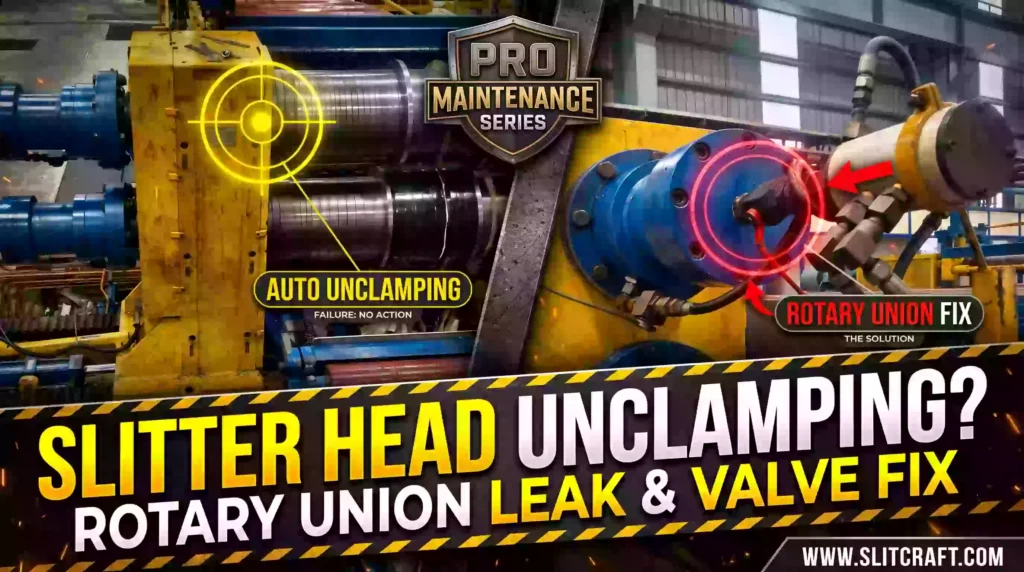
Few quality defects ruin a coil slitting shift faster than sudden slitter head unclamping while the line is running at speed—turning clean slit edges into heavy burr within seconds and forcing costly scrap.
Recently, we ran into this exact problem on our coil slitting line. Everything would look tight after tooling setup, yet once the line started running, the hydraulic cutter arbor would slowly lose clamping pressure and unclamp slightly on its own. Even a tiny axial shift in the knives caused severe edge burr, and in worse moments, the strip pushed forward without slitting cleanly at all.
After tracing the hydraulic circuit behind the arbor housing, we found the root cause: internal and external oil leakage in our R1602005013 R1602 G1.1/2 X 3/4″ RH Double Passage Hydraulic Rotary Union. With no spare rotary union sitting on the shelf and urgent coils waiting to run, here is how we diagnosed the failure and engineered a safe temporary shut-off valve fix to keep production moving.
Why Does Automatic Slitter Head Unclamping Happen While Running?
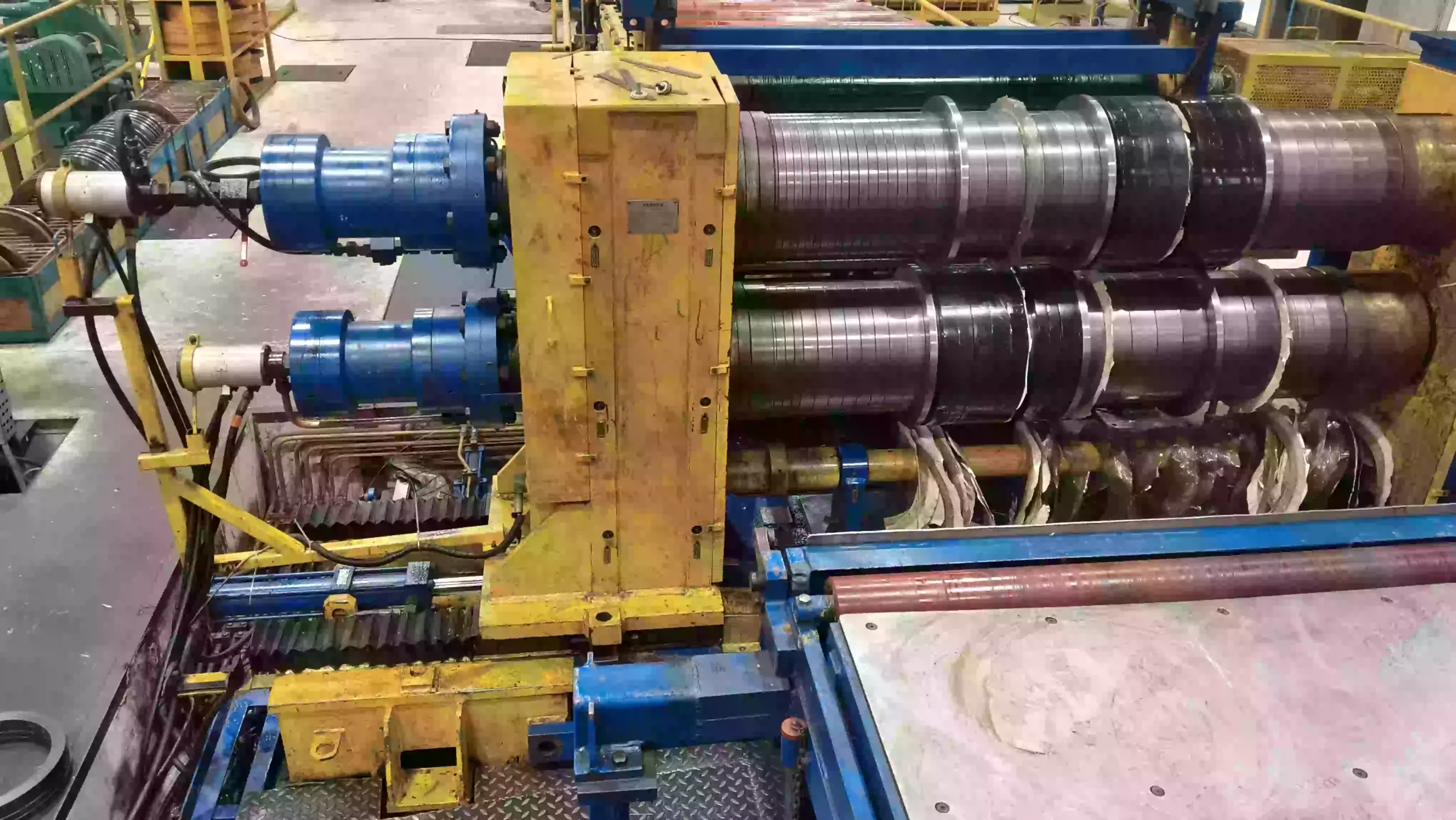
Modern heavy-duty slitting lines use hydraulic clamping nuts or hollow hydraulic cylinders mounted on the arbor ends to lock the rotary slitter knives, rubber stripper rings, and steel spacers tightly together without manual spanner hammering.
To feed high-pressure hydraulic oil into a spinning arbor cylinder, the machine relies on a double-passage hydraulic rotary union mounted at the rear of the cylinder housing:
-
Port A (Clamp Line): Pressurizes the cylinder piston to lock the knife stack axially.
-
Port B (Unclamp Line): Reverses piston travel to release the tooling after the run.
-
Internal Rotary Seals: Separate the high-pressure rotating shaft from the stationary hydraulic hoses.
When those rotary union seals wear out, pressurized oil slowly drips or bypasses internally while the arbor spins. As clamping pressure bleeds off, radial cutting forces push the knives apart—resulting in slitter head unclamping mid-coil, loss of horizontal knife clearance, and immediate edge burr.
(For other hydraulic actuator issues on the line, read our guide on Recoiler Separator Arm Overload and Alignment.)
How We Diagnosed the Leaking R1602005013 Rotary Union
Because the arbor appeared fully locked at the start of every coil, the defect initially looked like a tooling spacer calculation error. Here is what revealed the true hydraulic failure:
-
Repeating Burr Mid-Coil: Slit edges started clean at the head of the coil, then suddenly developed heavy rolled burr partway through the run—proving the knife clearance was opening dynamically under load.
-
Strip Slipping Without Cutting: Whenever clamping force dropped far enough, the upper and lower knives separated laterally and let the metal strip pass through uncut.
-
Visible Oil Dripping at the Rear Housing: Walking behind the slitter head drive/non-drive end while clamping pressure was active, we spotted hydraulic oil dripping directly from the rotary union (
R1602005013 R1602 G1.1/2 X 3/4" RH).
Every drop leaking past the rotary union meant less holding force on the cutter stack.
Emergency Shop-Floor Fix: Holding Clamping Pressure With a Hydraulic Ball Valve
A brand-new R1602005013 R1602 G1.1/2 X 3/4″ RH Double Passage Hydraulic Rotary Union could not be delivered the same day, and shutting down the slitting line for days was not an option.
To keep running safely until the replacement arrived, we installed a high-pressure hydraulic shut-off ball valve directly in the clamping line between the rotary union and the arbor hydraulic cylinder.

Step-by-Step Operating Procedure for the Valve Bypass
By isolating the cylinder after pressurization, the closed valve traps the hydraulic oil inside the clamping chamber so it cannot bleed backward through the worn rotary union:
-
Open the Hydraulic Valve Before Setup: Turn the red ball-valve handle to the OPEN position and actuate the unclamp control to release the slitter arbor.
-
Complete Knife & Spacer Tooling Setup: Load your slitter knives, stripper rings, and spacers onto the upper and lower arbors as usual.
-
Apply Full Hydraulic Clamping Pressure: Engage the overhead/arbor hydraulic clamp control until full system clamping pressure builds up on the gauge.
-
Close the Hydraulic Ball Valve Immediately: Turn the shut-off valve handle 90 degrees to the CLOSED position while clamping pressure is held. This locks the oil inside the cylinder regardless of rotary union seal wear.
-
Run the Slitting Line: Start the line—with the oil trapped mechanically at the cylinder port, slitter head unclamping stops completely and knife clearance stays rock-solid throughout the coil.
(Review proper high-pressure hydraulic ball valve ratings and rotary union maintenance guidelines before modifying any pressurized circuit.)
Critical Operator Safety Rules for This Temporary Setup
While a shut-off ball valve is an effective emergency bridge until your replacement R1602005013 rotary union arrives, strict operator discipline is mandatory:
-
Never Press Unclamp With the Valve Closed: Always verify the red valve handle is fully OPEN before energizing the hydraulic unclamp circuit for a knife change—otherwise dead-headed pressure can spike against the closed valve.
-
Check Valve Handle Position Before Every Start: Make “Clamp -> Close Valve -> Verify Handle” a mandatory sign-off step for every slitter operator on every shift.
-
Replace the Rotary Union Permanently: Treat the ball valve strictly as a short-term production bridge; install the new R1602 G1.1/2 X 3/4″ RH double-passage rotary union as soon as it arrives in stores.
Quick Troubleshooting Matrix: Slitter Head Unclamping & Burr
| Symptom on Slitting Line | Likely Hydraulic Cause | Immediate Action |
| Burr worsens halfway through a coil | Gradual pressure drop causing slitter head unclamping | Inspect rear rotary union for oil drips or internal bypass |
| Oil dripping from rear arbor coupling | Worn shaft seals inside double-passage rotary union | Note part number (R1602005013), order spare, fit hold valve |
| Strip passes through without slitting | Complete loss of axial clamping force on cutter stack | Stop line immediately; re-clamp and verify holding pressure |
| Cylinder won’t unclamp during setup | Shut-off valve left closed or unclamp solenoid stuck | Open manual ball valve fully before activating unclamp |
Final Thoughts
When a specialized hydraulic component like a double-passage rotary union fails mid-week, smart mechanical isolation can save an entire production schedule without compromising slit edge quality. Just make sure every operator on every shift follows the valve open/close discipline until the new rotary union is bolted in place.
Have you ever dealt with sudden slitter head unclamping or a leaking rotary union on your slitting line? Share how you kept your line running in the comments below!