Introduction
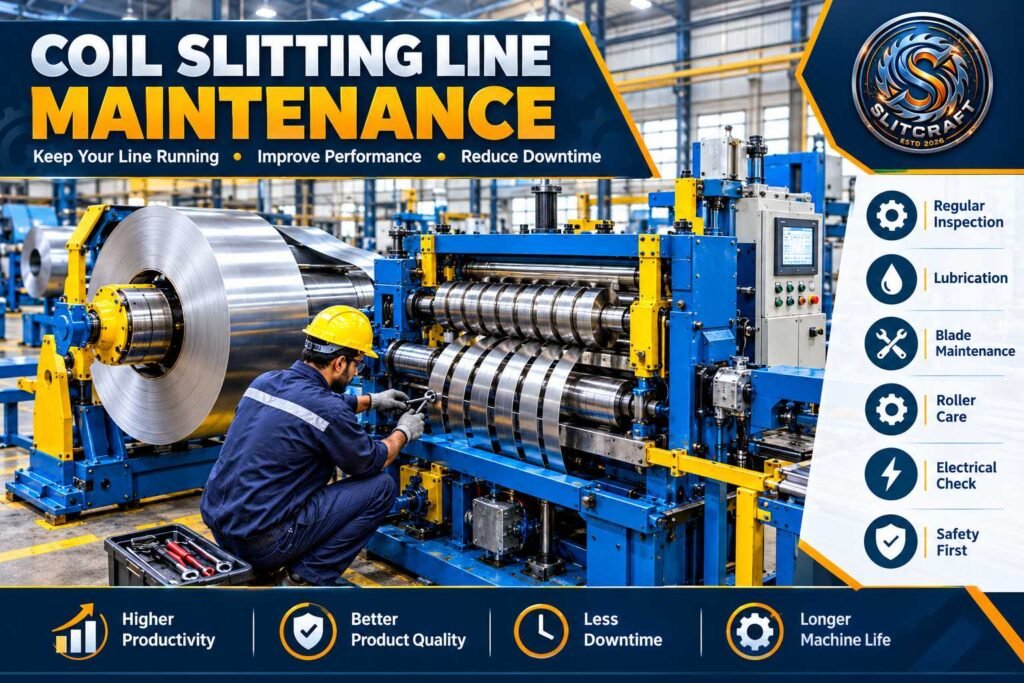
Coil Slitting Line Maintenance is critical for ensuring the optimal performance and longevity of the equipment. A comprehensive preventive maintenance checklist serves as an essential tool for operators and maintenance personnel. This checklist should include routine inspections, lubrication of moving parts, and the verification of alignment and tension settings. Additionally, it is imperative to monitor the condition of blades and replace them as necessary to maintain cutting accuracy. Regular adherence to this maintenance regimen not only minimizes downtime but also enhances the overall efficiency and safety of the slitting line operations.
COIL PROCESSING MACHINE MAINTENANCE
A coil slitting line is an essential piece of equipment in steel processing industries. It converts wide steel coils into narrower strips according to the required width and production specifications. These strips are commonly used in tube manufacturing, fabrication, automotive components, construction, and other industrial applications.
Whether a facility processes Hot Rolled Pickled and Oiled (HRPO) steel or Cold Rolled (CR) steel, proper machine maintenance is essential for reliable operation and consistent strip quality.
Without a planned maintenance programme, a coil slitting machine may experience excessive wear, lubrication failure, hydraulic leakage, vibration, damaged slitter knives, tension irregularities, and unexpected production downtime.
Coil slitting line maintenance involves regularly inspecting, cleaning, lubricating, adjusting, and servicing machine components to help prevent breakdowns and maintain operational performance.
This guide explains the main maintenance activities, recommended inspection frequencies, lubrication practices, common problems, and safety precautions for industrial steel coil slitting lines.
Important: The maintenance frequencies below are based on the supplied maintenance and lubrication schedules. Actual requirements vary by machine design, operating conditions, and component manufacturer. Always follow the applicable machine manual and approved maintenance procedures.
1. Why Coil Slitting Line Care Matters: Standard Maintenance for Coil Processing Equipment
Preventive maintenance helps identify developing problems before they lead to major equipment failures.
Implementing standard maintenance for coil processing equipment ensures maximum uptime, protects cutter arbor alignment, and prevents costly unexpected breakdowns.
The main benefits include:
- Reduced machine downtime: Early detection of worn or damaged components helps prevent unexpected stoppages.
- Consistent strip quality: Proper knife condition, alignment, and tension control help reduce slitting defects.
- Longer component life: Correct lubrication reduces friction and wear on moving parts.
- Improved machine reliability: Regular inspections help identify loose fasteners, abnormal vibration, and mechanical problems.
- Better production planning: Scheduled maintenance makes it easier to plan inspections, repairs, and spare parts.
- Safer operation: Identifying leaks, damaged guards, and mechanical defects helps reduce workplace hazards.
A preventive maintenance checklist should be prepared for each machine section and updated according to inspection findings and operating experience.
2. Daily Coil Slitting Line Maintenance Checklist
Daily inspections should be performed before production begins and during each shift where specified by the equipment maintenance schedule.
2.1 Visual Inspection and Abnormal Noise
Inspect the machine and its surrounding equipment for:
- Oil or grease leakage.
- Loose or damaged components.
- Abnormal noise or vibration.
- Visible wear on moving parts.
- Damaged hoses, pipes, cables, or guards.
- Unusual operating temperatures.
Investigate abnormal noise, vibration, or temperature changes before continuing operation where a fault may affect safe operation or damage the machine.
2.2 Hydraulic System Inspection
The hydraulic system operates components such as cylinders, clamping mechanisms, and other hydraulically powered assemblies.
Daily or shift-based checks should include:
- Checking the hydraulic oil level in the reservoir.
- Inspecting hoses, fittings, and connections for leakage.
- Monitoring hydraulic oil temperature.
- Checking for unusual pump noise.
- Looking for visible contamination or deterioration.
If the oil temperature is higher than the approved operating range, investigate the cause. Do not simply continue operating the machine without checking the problem.
Hydraulic oil level, cleanliness, filter condition, and oil replacement intervals should be maintained according to the equipment manufacturer’s recommendations.
2.3 Pneumatic System and FRL Unit
Pneumatic systems use compressed air to operate various machine functions. The Filter-Regulator-Lubricator (FRL) unit helps condition the compressed air where fitted.
Check the following:
- Drain condensate from the FRL filter bowl as specified in the maintenance schedule.
- Inspect pneumatic pipes and fittings for air leakage.
- Check pressure settings against the approved operating requirements.
- Inspect the filter bowl and regulator for visible damage.
- Confirm that pneumatic components operate correctly.
Air leaks should be repaired promptly because they can reduce system efficiency and affect machine operation.
2.4 Uncoiler and Recoiler Mandrels
The uncoiler holds and feeds the incoming steel coil, while the recoiler winds the slit strips into finished coils.
The supplied schedule specifies daily grease-gun lubrication for the uncoiler and recoiler mandrels.
Maintenance personnel should:
- Inspect the mandrel surfaces for damage and abnormal wear.
- Check for signs of sticking or uneven movement.
- Apply the specified grease at designated lubrication points.
- Inspect accessible fittings and connections.
- Confirm that the mandrel operates according to the machine’s procedure.
Use only the lubricant approved for the specific lubrication point.
2.5 Coil Car Maintenance
The coil car transports coils between the loading position and the relevant machine station.
The supplied schedule identifies the following daily lubrication points:
- Carriage guide bushes.
- Drive gears.
- Shaft bearings.
Inspect the coil car for smooth movement, visible damage, abnormal noise, and loose components. Keep the travel path clear of obstructions and remove accumulated debris using the approved cleaning procedure.
2.6 Peeler Assembly and Shear Hinge Bushes
The maintenance schedule specifies daily grease-gun lubrication for the peeler assembly hinge bushes and shear hinge bushes.
Check for:
- Excessive play or looseness.
- Abnormal movement.
- Worn or damaged bushes.
- Damaged grease fittings.
- Signs of inadequate lubrication.
If a component is worn or damaged, assess whether adjustment or replacement is necessary.
2.7 Tension Unit Felt Pads
Inspect the felt pads in the tension unit for wear, contamination, and foreign material.
Damaged or contaminated pads can affect strip handling and operating consistency. Clean or replace them according to the equipment manufacturer’s instructions.
3. Weekly Coil Slitting Line Maintenance Checklist
Weekly maintenance should focus on components that require more detailed inspection than routine shift checks.
3.1 Shaft Couplings
Inspect shaft couplings for:
- Alignment.
- Bolt tightness.
- Coupling bush wear.
- Visible damage or excessive play.
Use the specified alignment method and approved bolt torque values. Replace worn coupling bushes and correct misalignment before it causes additional mechanical wear.
3.2 Belts and Chain Drives
Check belt and chain drives for:
- Excessive slackness.
- Wear and damage.
- Alignment problems.
- Unusual noise.
- Loose or damaged connecting components.
Adjust tension and alignment according to the machine manual. Replace worn components instead of relying on repeated adjustments to compensate for excessive wear.
3.3 Filters and Strainers
Inspect hydraulic filters, strainers, and other applicable filtration components for clogging, restricted flow, and damage.
Clean or replace elements according to the manufacturer’s instructions. Do not operate with a damaged filter element or bypass a required filtration system to avoid a maintenance stoppage.
3.4 Pneumatic and Hydraulic Leakage
Inspect accessible pneumatic and hydraulic lines, fittings, valves, and connections.
Repair leaks using approved procedures. Never search for a high-pressure hydraulic leak with bare hands because escaping fluid can penetrate the skin and cause serious injury.
3.5 Separator Discs and Shafts
The supplied schedule calls for separator disc inspections approximately every two days.
Check separator discs for:
- Burrs and scratches.
- Edge cuts.
- Surface damage.
- Excessive wear.
Also check separator shafts for free rotation, alignment, and bearing-related problems.
Damaged separator discs should be repaired or replaced as permitted by the manufacturer. Confirm that the assembly is correctly aligned and suitable for the intended strip setup.
3.6 General Lubrication Points
The supplied lubrication instructions identify several weekly lubrication points, including:
- Pedestal bearings.
- Bearing bushes, guide bars, and chocks.
- Jacking screws and couplings.
- Uncoiler and recoiler sliding base liners.
- Hold-down roll assembly chain sprockets and roller bearings.
- Peeler assembly sliding guides.
- Shear sliding guides and rack-and-pinion points.
- Slitter linear guides and specified lead screw or coupling points.
- Scrap winder sliding base liners.
- Coil car wheel bearings.
Important: The correct lubricant, quantity, and application method depend on the component. The source schedule specifies grease-gun, brush, and manual application for different points. Do not assume that every point requires the same grease or that more lubricant is always better.
4. Bi-Weekly Maintenance: Every Two Weeks
A two-week maintenance inspection should include components that need closer checks for wear, alignment, clearance, or mechanical condition.
4.1 Brake Shoe Liners
Inspect brake shoe liners for thickness, uneven wear, and damage.
Replace liners that have reached their specified wear limits. Check brake operation according to the approved procedure before returning the machine to production.
4.2 Sliding Guides and Liners
Check sliding guides and their liners for:
- Excessive clearance.
- Looseness.
- Uneven wear.
- Restricted movement.
- Surface damage.
Adjust clearances using the approved method. Shimming, machining, or replacement should only be performed by qualified personnel in accordance with equipment specifications.
4.3 Hydraulic Fluid and Filters
Inspect hydraulic fluid condition and filter elements for contamination, sediment, or deterioration.
If the fluid or filter requires servicing, follow the specified cleaning or replacement procedure. The maintenance interval may need to be adjusted if operating conditions or fluid analysis indicate a problem.
4.4 Shear Knife Condition and Clearance
Inspect the shear knife edges for sharpness and damage. Check knife clearance according to the machine manual and the material being processed.
Blunt or damaged knives may contribute to poor cutting quality. Grinding, sharpening, and clearance adjustments should be performed only by qualified personnel using the approved setup procedure.
5. Monthly Coil Slitting Line Maintenance
Monthly maintenance should include a more detailed examination of mechanical assemblies, fasteners, rolls, bushes, and cylinders.
5.1 Nut, Bolt, and Fastener Inspection
Inspect accessible fasteners for looseness, damage, and excessive play.
Use the specified tightening torque. Do not tighten fasteners indiscriminately, because incorrect torque can damage threads, distort assemblies, or affect alignment.
5.2 Hydraulic and Pneumatic Cylinders
Inspect cylinders for:
- Oil or air leakage.
- Damaged rods.
- Worn seals.
- Damaged fittings.
- Abnormal movement.
Replace defective seals or other components according to the approved maintenance procedure.
5.3 Rolls, Tables, and Pads
Inspect lined rolls, tables, and pads for cracks, cuts, indentation, surface wear, or damaged lining.
Damaged surfaces can affect material handling and strip quality. Regrinding or relining should be carried out according to the manufacturer’s requirements.
5.4 Guide and Bearing Bushes
Check bushes for excessive play, wear, and irregular movement.
Replace components that have exceeded their permitted wear limits. Inspect the associated shafts and mounting surfaces if premature wear is found.
5.5 Pinch Rolls and Deflector Rolls
Inspect roll surfaces for:
- Deep marks.
- Indentations.
- Uneven wear.
- Surface damage.
- Irregular contact.
Regrinding or replacement may be required if the roll condition affects performance or material quality.
5.6 Recoiler and Separator Assemblies
Inspect applicable pusher bushes, base liners, hold-down roll components, and bearings.
Check clearances, free rotation, and visible wear. Correct the underlying cause if components repeatedly develop excessive play or damage.
6. Periodic Maintenance: Every Two to Three Months
Some components require scheduled inspection at longer intervals or after a specified number of operating hours.
The supplied master maintenance schedule includes checks such as the following.
6.1 Coil Car Guide Rod Bushes
Inspect guide rod bushes for wear and excessive play. Replace worn bushes and check whether misalignment or another mechanical issue has contributed to premature wear.
6.2 Slitter Arbor Inspection
Inspect the slitter arbors for parallelism, axial play, and the condition of associated keys, grooves, and adjustment mechanisms.
The supplied equipment-specific schedule lists a maximum parallelism value of 0.08 mm and an axial-play limit of 0.08 mm for the identified checks.
These values are specific to that maintenance schedule and must not be treated as universal limits for every slitting machine. Confirm the applicable tolerances in the correct equipment documentation before making adjustments.
6.3 Gearbox Oil Maintenance
Lubrication is a critical part of preventive maintenance. Incorrect oil condition or insufficient lubrication can accelerate wear and cause component failure.
The supplied lubrication instructions state the following general guidance where more specific supplier instructions are unavailable:
- For a new gearbox, the first oil change is recommended after 500 operating hours or one month, whichever comes first.
- Subsequent oil changes are recommended after 1,500 operating hours or three months, whichever comes first.
- Oil should be assessed for deterioration, and the interval should be shortened if required.
- Grease replacement is suggested at approximately one- to two-month intervals, with periodic replenishment as needed.
These are general instructions from the supplied documents, not universal intervals. Gearboxes, motors, couplings, and other purchased components may have their own lubricant specifications and service intervals. Follow the applicable manufacturer’s manual whenever it provides different or more specific instructions.
7. Coil Slitting Line Lubrication Guide
Proper lubrication reduces friction and helps protect bearings, bushes, gears, sliding surfaces, and other moving components.
Common Lubrication Points
| Machine component | Lubrication activity | Reference frequency in supplied schedule |
|---|---|---|
| Uncoiler and recoiler mandrels | Apply specified grease | Daily |
| Coil car guide bushes | Apply specified grease | Daily |
| Coil car drive gears and shaft bearings | Lubricate designated points | Daily |
| Peeler and shear hinge bushes | Apply specified grease | Daily |
| Slitter linear guides | Lubricate designated guides | Weekly |
| Separator assemblies | Inspect discs and shafts | Approximately every two days |
| Pedestal bearings | Apply specified grease | Weekly |
| Sliding base liners | Apply specified grease | Weekly |
| Hold-down roll bearings | Lubricate as specified | Weekly or monthly, depending on the bearing and schedule |
| Gearboxes | Check oil and follow the applicable oil-change instructions | Manufacturer-specified interval |
Best Practices for Lubrication
- Identify the exact lubrication point using the machine drawing or lubrication chart.
- Confirm the required lubricant grade and application method.
- Clean the lubrication fitting before applying grease.
- Apply the specified quantity; avoid excessive lubrication.
- Check for blocked fittings, contamination, and leakage.
- Record the date, lubrication point, lubricant used, and maintenance person.
- Follow the specified isolation procedure before servicing moving or hazardous equipment.
Do not mix different grease or oil types unless compatibility has been confirmed. Incorrect lubricant selection can damage components or reduce lubrication effectiveness.
8. Common Coil Slitting Machine Problems and Their Possible Causes
A preventive maintenance programme should also track recurring production and quality problems.
Problem 1: Excessive Burrs on Slit Strip Edges
Possible causes include:
- Worn or damaged slitter knives.
- Incorrect knife clearance or overlap.
- Incorrect tooling setup.
- Unsuitable tooling for the material and thickness.
Recommended checks: Inspect the knife edges and setup, verify the applicable tooling specifications, and check the resulting strip edges after an approved trial.
Problem 2: Strip Tension Problems
Possible causes include:
- Incorrect tension settings.
- Problems with the tension unit.
- Worn felt pads.
- Mechanical issues in the recoiler or drive system.
- Incorrect setup for the material being processed.
Recommended checks: Inspect the tension unit, felt pads, drive components, and control settings. Verify the setup against the machine manual and the approved process parameters.
Problem 3: Vibration or Abnormal Noise
Possible causes include:
- Misaligned shaft couplings.
- Loose fasteners.
- Worn bearings or bushes.
- Damaged gears or drive components.
- Incorrectly assembled or damaged rotating parts.
Recommended checks: Stop the equipment when required by the risk assessment or operating procedure. Isolate it before inspecting hazardous moving components. Check alignment, fasteners, bearings, and other suspected parts.
Problem 4: Hydraulic Oil Leakage
Possible causes include:
- Loose or damaged fittings.
- Worn seals.
- Damaged hoses.
- Cylinder leakage.
- Deteriorated connections.
Recommended checks: Follow the approved isolation and depressurization procedure before repair. Replace damaged components and inspect the system before returning it to service.
Problem 5: Poor Coil Winding or Uneven Strip Alignment
Possible causes include:
- Incorrect tension settings.
- Alignment issues.
- Worn guide or roll surfaces.
- Incorrect separator setup.
- Material or tooling conditions.
Recommended checks: Inspect the winding arrangement, alignment, separator condition, and tension settings. Confirm that the problem is not related to the incoming material or the selected process parameters.
These are possible causes, not definitive diagnoses. Always investigate the actual machine condition before making adjustments.
9. Safety Precautions During Slitting Line Maintenance
A coil slitting line contains heavy coils, rotating shafts, sharp knives, pinch points, and potentially hazardous hydraulic and pneumatic systems.
Follow these precautions:
- Stop and isolate the equipment according to the approved lockout/tagout procedure before maintenance.
- Verify that hazardous energy has been isolated and stored energy has been safely released.
- Secure heavy coils and suspended loads using approved methods.
- Never place hands near rotating shafts, pinch rolls, or moving mechanisms.
- Use appropriate personal protective equipment.
- Handle slitter knives with suitable protective equipment and approved tooling.
- Never inspect pressurized hydraulic leaks with bare hands.
- Use the correct tools and approved lifting equipment.
- Allow only trained and authorized personnel to perform specialist repairs and adjustments.
- Reinstall guards and safety devices before restarting the machine.
- Follow the manufacturer’s commissioning and restart procedures after maintenance.
Safety requirements and site procedures must always take priority over production schedules.
10. How to Prepare an Effective Preventive Maintenance Record
A maintenance checklist becomes more useful when inspection results are recorded consistently.
A maintenance log can include the following columns:
| Date | Machine section | Inspection item | Condition found | Action taken | Technician |
|---|---|---|---|---|---|
| DD/MM/YYYY | Uncoiler | Mandrel condition | Record actual finding | Record corrective action | Name |
| DD/MM/YYYY | Hydraulic system | Oil level and leakage | Record actual finding | Record corrective action | Name |
| DD/MM/YYYY | Slitter | Knife condition | Record actual finding | Record corrective action | Name |
| DD/MM/YYYY | Recoiler | Tension and winding condition | Record actual finding | Record corrective action | Name |
Record the actual findings rather than simply marking every item as satisfactory. Include abnormal conditions, replaced parts, outstanding repairs, and follow-up inspections.
Review maintenance records regularly to identify repeated faults and opportunities to improve equipment reliability.
Frequently Asked Questions
1. How often should a coil slitting line be maintained?
Routine visual inspections should be performed before production and at the intervals specified for each shift. Other maintenance activities may be scheduled daily, weekly, every two weeks, monthly, or at specified operating-hour intervals. The correct schedule depends on the machine design and its operating conditions.
2. What are the most important coil slitting line maintenance points?
Important areas include the uncoiler, recoiler, slitter knives and arbors, separator assemblies, tension unit, bearings, drive couplings, hydraulic system, pneumatic system, and lubrication points.
3. Why is lubrication important in a slitting machine?
Lubrication reduces friction and wear in moving components. Insufficient or incorrect lubrication can lead to overheating, premature component failure, and unexpected downtime.
4. What causes burrs during steel coil slitting?
Possible causes include worn knives, incorrect knife clearance or overlap, unsuitable tooling, and incorrect setup. Inspect the tooling and verify the settings against the applicable machine and process specifications.
5. How can slitting machine downtime be reduced?
Follow a documented preventive maintenance schedule, inspect the machine regularly, record recurring faults, use the correct lubricants, replace worn components when necessary, and train maintenance personnel in safe inspection procedures.
6. Is the same maintenance schedule suitable for HRPO and CR coil slitting?
Some mechanical maintenance tasks may be similar, but the appropriate tooling, cutting setup, and process parameters depend on the machine and material specifications. Follow the equipment manual and the approved process requirements for each material.
Conclusion
Effective coil slitting line maintenance depends on regular inspection, correct lubrication, timely replacement of worn components, and proper troubleshooting. A structured preventive maintenance programme can help steel processing facilities improve machine reliability, reduce unplanned downtime, and maintain consistent strip quality.
For HRPO and CR coil slitting operations, maintenance teams should pay particular attention to slitter knives, separator assemblies, tension controls, bearings, drive components, hydraulic systems, and lubrication points.
Start with a documented maintenance checklist, follow the equipment manufacturer’s recommendations, and maintain accurate service records. Over time, these practices can help identify recurring problems and support more reliable production.
If you operate or maintain a steel coil slitting line, use the checklist in this guide as a starting point and adapt it to your machine’s approved maintenance schedule.
“Slitter Knife Clearance Chart (2.5 mm – 8.1 mm): How to Eliminate Edge Burr & Reduce Costly Scrap”